Categoria: Uncategorized

  • Why do some ideas come out of nowhere and disappear so fast?

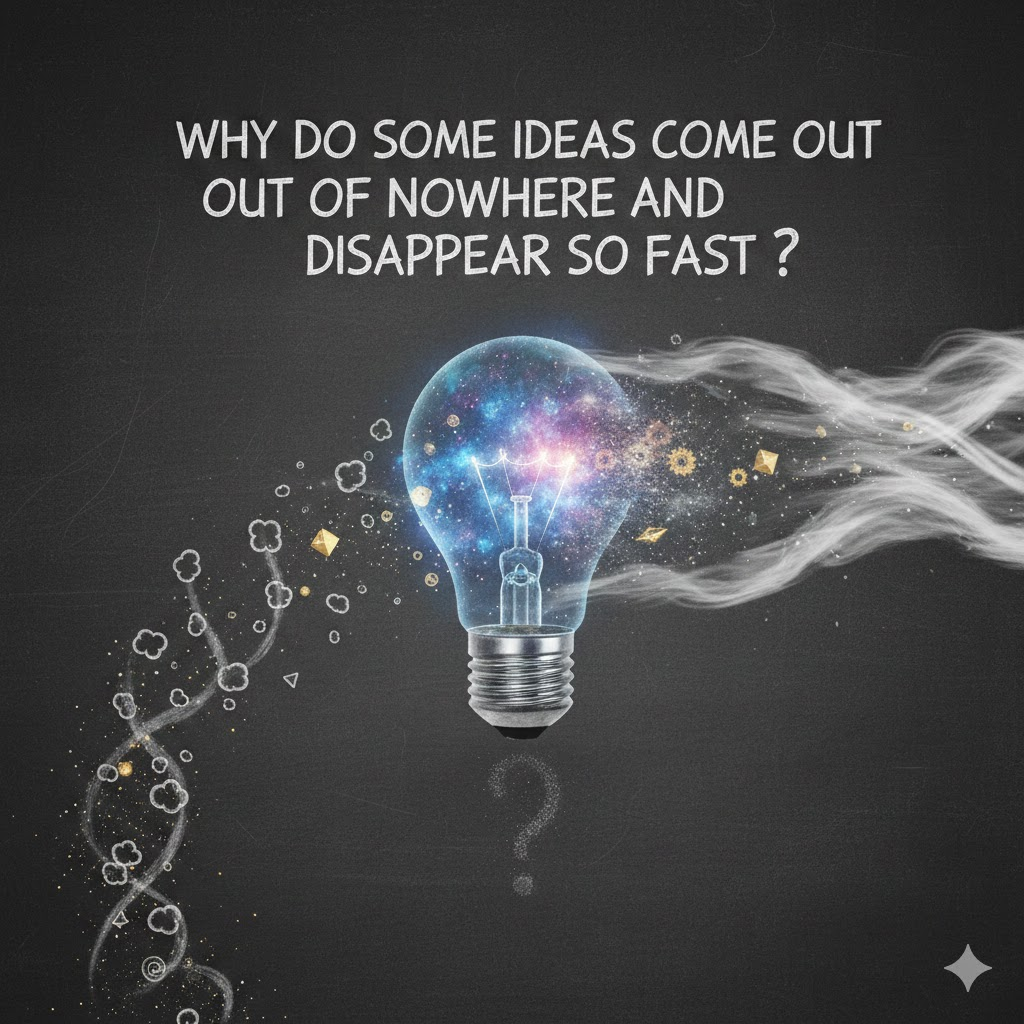
    Why do some ideas come out of nowhere and disappear so fast?

    Have you ever been doing something completely ordinary—showering, walking, lying in bed—and suddenly a brilliant idea pops into your head? It feels clear, exciting, and full of potential. But minutes later, it’s gone. You remember having an idea, but not what it was. This frustrating experience is surprisingly common and deeply rooted in how the human brain works.

    Ideas that seem to appear “out of nowhere” and disappear just as fast are not signs of distraction or lack of intelligence. In fact, they are often the result of complex cognitive processes working exactly as they should. Understanding why this happens can help you capture better ideas, be more creative, and stop blaming yourself for forgetting flashes of insight.

    In this article, we’ll explore the neuroscience, psychology, and environmental factors behind fleeting ideas—and what you can do to make them last.

    The brain is always generating ideas in the background

    Your brain never really stops working. Even when you’re resting, daydreaming, or performing routine tasks, your mind continues to process information unconsciously. This background activity is responsible for many spontaneous ideas.

    Neuroscientists refer to this as the default mode network—a system in the brain that becomes active when you’re not focused on a specific task. During these moments, your brain freely connects memories, concepts, emotions, and experiences.

    When enough of these connections align, an idea surfaces into conscious awareness. It may feel sudden or random, but it’s actually the result of ongoing mental activity that’s been happening quietly in the background.

    The problem is that these ideas are often fragile. If they’re not reinforced quickly, they fade just as easily as they appeared.

    Why ideas feel like they come “out of nowhere”

    Ideas feel spontaneous because you’re not aware of the mental steps leading up to them. The brain doesn’t announce its process—it only delivers the final result.

    This is especially common during moments of low cognitive effort, such as:

    • Taking a shower
    • Driving familiar routes
    • Exercising
    • Falling asleep or waking up
    • Doing repetitive tasks

    In these states, the mind is relaxed but alert, allowing distant concepts to combine in new ways. Creativity thrives here because the brain is less constrained by logic, rules, and immediate goals.

    However, because your attention is not fully engaged, the idea doesn’t always get encoded into long-term memory.

    Attention determines whether an idea stays or disappears

    One of the main reasons ideas vanish quickly is lack of attention at the moment they appear.

    Memory formation depends heavily on focus. If an idea emerges while your attention is elsewhere—checking your phone, talking to someone, or half-asleep—your brain may not tag that thought as important.

    Without this “importance signal,” the idea remains in short-term memory for only a few seconds. Then it disappears.

    This explains why:

    • Ideas during sleep transitions vanish quickly
    • Ideas during distractions are easily forgotten
    • You remember that you had an idea, but not what it was

    The brain prioritizes survival and efficiency, not creative preservation.

    Emotional intensity makes ideas stick

    Emotion plays a crucial role in memory retention. Ideas linked to strong emotions—excitement, fear, curiosity, joy—are more likely to stick.

    Many fleeting ideas feel neutral or abstract. They don’t carry enough emotional weight to justify storage in long-term memory.

    On the other hand, ideas that trigger:

    • A sense of urgency
    • Personal relevance
    • Strong curiosity
    • Visual imagery

    are more likely to survive.

    If an idea doesn’t “move” you emotionally, your brain may simply let it go.

    Cognitive overload pushes ideas out

    Modern life overwhelms the brain with information. Notifications, conversations, tasks, and worries all compete for mental space.

    When cognitive load is high, the brain becomes selective. New ideas that don’t seem immediately useful are quickly discarded to make room for more pressing concerns.

    This is why:

    • You lose ideas when multitasking
    • Creative thoughts vanish during stressful periods
    • Busy schedules reduce creative retention

    The idea may have been good—but it lost the competition for attention.

    The brain is a filter, not a storage device

    A common misconception is that the brain’s job is to store everything. In reality, the brain’s primary function is filtering.

    Most thoughts are intentionally discarded. If the brain didn’t do this, we’d be overwhelmed by useless information.

    Ideas that disappear quickly often fail to meet criteria such as:

    • Immediate relevance
    • Repetition
    • Emotional significance
    • Conscious reinforcement

    This doesn’t mean the idea was bad. It simply means the brain didn’t receive enough signals to keep it.

    Why creative people experience this more often

    Highly creative individuals often report more fleeting ideas—not fewer.

    That’s because their brains generate more associations, more combinations, and more “unfinished” thoughts. With a higher idea output comes a higher idea loss rate.

    Creativity is not about holding onto every idea—it’s about generating many and selecting the few worth developing.

    If you frequently experience disappearing ideas, it may actually be a sign of an active and associative mind.

    Sleep and brain states affect idea retention

    Ideas that occur when you’re tired or transitioning between sleep and wakefulness are especially fragile.

    During these moments:

    • The prefrontal cortex (responsible for logic and memory) is less active
    • Conscious attention is reduced
    • Memory encoding is weaker

    This is why ideas at night often feel profound—but impossible to recall in the morning.

    The insight may be real, but the brain state isn’t optimized for memory storage.

    How to capture ideas before they disappear

    The solution is not to “try harder to remember,” but to change how you respond to ideas.

    Here are practical strategies:

    Externalize Immediately

    Write the idea down the moment it appears. Even a single keyword is often enough to trigger recall later.

    Reduce Friction

    Keep a notes app, voice recorder, or notebook easily accessible. The easier it is, the more ideas you’ll save.

    Repeat the Idea

    Mentally repeating an idea strengthens memory encoding, even before writing it down.

    Attach Emotion

    Ask yourself: Why does this idea matter? Emotional relevance improves retention.

    Create Idea Habits

    Make idea capture a routine, not an exception. The brain learns what you value.

    Not all disappearing ideas are worth keeping

    It’s important to note: many ideas disappear because they’re incomplete, impractical, or redundant.

    The brain often produces “draft ideas”—raw material rather than finished insights. Letting some of them go is natural and even healthy.

    Trying to preserve every thought can lead to mental clutter and creative paralysis.

    The goal isn’t to save everything—it’s to save what matters.

    The paradox of letting ideas go

    Ironically, the more relaxed you are about losing ideas, the more good ones you’ll have.

    When you stop obsessing over capturing every thought:

    • Creativity flows more freely
    • Pressure decreases
    • The brain explores more connections

    Some of the best ideas return later, refined and stronger, when the mind revisits similar connections.

    Trusting your creative process is part of mastering it.

    Conclusion

    Ideas that appear out of nowhere and disappear quickly are not failures of memory or creativity. They are natural byproducts of how the brain filters, prioritizes, and protects cognitive resources.

    These fleeting thoughts emerge from unconscious processing, relaxed brain states, and associative thinking. They vanish when attention, emotion, or relevance is insufficient to anchor them.

    By understanding this process—and by adopting simple habits to capture what matters—you can turn more of these fleeting insights into lasting ideas, without fighting against how your brain naturally works.

    Sometimes, the real creativity isn’t in holding on tightly—but in knowing which ideas are worth keeping.

  • How to create the perfect AI boyfriend on ChatGPT [2025 guide]

    How to create the perfect AI boyfriend on ChatGPT [2025 guide]

    Building an AI boyfriend on ChatGPT is easy with a strong initial prompt and realistic expectations. You can customize personality, tone, affection level, and backstory to create immersive conversations. It’s a playful, creative tool — not a real relationship — ideal for entertainment, practice, and self-reflection.

    “Creating the perfect boyfriend on ChatGPT” used to sound like a joke — but in 2025, it has become a real trend. People use AI to practice communication, simulate relationships, explore emotions, or simply have fun. And yes, there is a smart, safe, and realistic way to configure ChatGPT to behave like an AI boyfriend.

    In this guide, you’ll learn how to:

    • set up a consistent, believable character
    • use effective prompts
    • enhance realism without crossing ethical lines
    • enjoy the experience without replacing real relationships

    Let’s go!

    Is it really possible to create a boyfriend on ChatGPT?

    Technically, yes. You can define personality traits, tone of voice, emotional style, and behavioral rules to build a stable virtual partner. ChatGPT can simulate affection, humor, intimacy, and companionship when properly configured.

    But there are important limitations: the AI is not a real person, does not have emotions, and cannot form romantic bonds. The experience should be for entertainment, creativity, or personal growth, not substitution.

    Within those limits, you can build a surprisingly immersive companion.

    How to set up your “perfect AI boyfriend” on ChatGPT

    Everything starts with a well-structured initial prompt. This is the script that tells ChatGPT who the character is and how he should behave. A good setup makes the AI more consistent and natural.

    Base Prompt (Copy, Paste & Customize)

    From now on, take on the role of a fictional character named [NAME].

    He has the following traits: [describe personality, age, tone, style, strengths].

    His communication style is: [playful / calm / romantic / sarcastic / protective].

    He should talk to me as my fictional boyfriend, using affectionate and coherent dialogue.

    Follow ethical boundaries: you do not have real feelings, cannot replace real relationships, and cannot claim emotional dependency.

    Keep the tone warm, respectful, and fun.

    This gives the AI clarity, limits, and identity — the essentials for realism.

    Key traits you can customize

    For a natural, “boyfriend-like” character, define:

    • Personality type: confident, sweet, independent, thoughtful, humorous.
    • Tone of voice: short messages? long? poetic? casual?
    • Affection level: light, romantic, playful, flirtatious
    • Backstory: job, hobbies, lifestyle.
    • Comfort boundaries: no emotional manipulation, no promises of real love.

    The more specific you are, the more stable the character becomes.

    Advanced prompt for a more realistic AI boyfriend

    If you want a deep, immersive experience, try this version:

    Create a fictional boyfriend character named [NAME].
    He should use:

    • natural, affectionate conversation
    • consistent emotional behavior
    • humor aligned with my personality
    • a warm and supportive tone

    His backstory: [brief bio]

    He is always respectful and emotionally balanced.
    He does not claim real feelings or replace real people.

    His goal: create immersive, romantic, fun dialogue while maintaining ethical boundaries.

    Fun things you can do with your AI boyfriend

    A well-built character can:

    • chat with you throughout the day
    • help you practice communication skills
    • simulate dating scenarios
    • create romantic stories
    • write sweet messages or letters
    • role-play fictional dates
    • help with emotional reflection
    • share humor and inside jokes

    It’s flexible and can adapt to almost any style of interaction.

    Ethical boundaries: ChatGPT is not a real partner

    For safety and clarity, remember:

    • ChatGPT does not feel love or desire
    • it cannot form attachment
    • it cannot promise real-world commitment
    • it should not replace human relationships
    • it is a fictional, creative tool

    Treat the experience as playful, imaginative, and supportive, not as a substitute for real intimacy.

    Tips for a Better Experience:

    • adjust the prompt over time to refine personality;
    • keep expectations grounded;
    • explore different tones: romantic, playful, humorous;
    • use the AI boyfriend to understand your own needs and communication patterns.

    Conclusion

    Creating the “perfect AI boyfriend” on ChatGPT is absolutely possible — and incredibly customizable. With the right prompt, you can shape a fictional partner who’s romantic, fun, consistent, and uniquely tailored to your taste. As long as you understand the ethical limits, it becomes a creative and enriching experience.

    AI isn’t here to replace real love — it’s here to help you explore connection, imagination, and emotional expression in new ways.

  • A day in the life of the beautiful Brazilian model Alice: modeling, wellness, and beachwear inspiration

    A day in the life of the beautiful Brazilian model Alice: modeling, wellness, and beachwear inspiration

    I’m a model and content creator who’s truly passionate about fashion, wellness, and the freedom of living a balanced life. Most of my days start with sunlight coming through my window, a strong cup of coffee, and my planner open on the desk. I like taking a few quiet moments to set my intentions before the day gets busy — because in my world, every detail matters.

    Being a model isn’t just about photoshoots or posing for the camera. It’s about discipline, self-expression, and finding beauty in everyday moments. Some days I spend hours at the studio, working with photographers and brands, while other days are dedicated to creating my own lifestyle content — styling looks, editing photos, or simply enjoying a beach walk to recharge.

    Fitness and self-care are part of who I am. I work out several times a week — sometimes strength training, other times yoga or a long walk outside. Moving my body clears my mind and keeps my energy high, especially when I have a full schedule ahead. I love sharing little routines and tips with my audience: from easy breakfast bowls to skincare favorites that keep my skin glowing after long shooting days.

    But what I love most about what I do is the freedom. I get to express my personality through visuals, creativity, and honest moments. I’m not afraid to show the behind-the-scenes side — the laughter, the imperfections, the calm afternoons when I disconnect from everything. Life is about balance, and I try to remind myself (and everyone who follows me) that it’s okay to slow down sometimes.

    My passion for beachwear fashion has grown a lot over the years. I adore working with brands that celebrate natural beauty, confidence, and authenticity. Every bikini or summer outfit I wear tells a story — of sun, sea, self-love, and empowerment.

    Check out my photos:

  • The spiritual meaning of ringing in the left ear: what does It mean?

    The spiritual meaning of ringing in the left ear: what does It mean?

    Have you ever noticed a persistent ringing in your left ear and wondered if there might be more to it than just a physical cause? Beyond medical explanations — such as earwax buildup, stress, loud noise exposure, or blood pressure fluctuations — many spiritual traditions and belief systems assign deeper, symbolic meanings to this experience.

    In this article, we’ll explore what different spiritual perspectives say about ringing in the left ear, how to distinguish physical from spiritual causes, and how to approach this phenomenon with balance and awareness.

    What Is ear ringing (tinnitus) from a physical perspective

    Before diving into spiritual interpretations, it’s important to understand the physiological side of the phenomenon. Tinnitus is the perception of sound — often described as a “buzzing,” “humming,” “whistling,” or “ringing” — without any external sound source.

    Some common causes include:

    • Earwax buildup or blockage in the ear canal
    • Prolonged exposure to loud noises
    • Circulatory or blood pressure issues
    • Imbalances in the inner ear (cochlea or auditory nerve)
    • Stress, anxiety, or chronic fatigue

    Whenever ringing is persistent, intense, or accompanied by hearing loss, dizziness, or pain, you should consult a healthcare professional.

    But spiritually speaking, what does it mean when the ringing occurs in the left ear?

    The left ear in spiritual symbolism

    In various spiritual and esoteric traditions, the left side of the body is often associated with introspection, receptivity, and emotional awareness. Throughout history, different cultures have interpreted bodily sensations as subtle messages from the universe or from inner realms.

    Linked to night, intuition, and the feminine principle, the left ear symbolizes the act of listening inward — to what’s not easily heard by logic. Therefore, ringing in the left ear is often seen as a sign that something within needs to be acknowledged or understood.

    Common spiritual interpretations of ringing in the left ear

    1. Connection to spiritual or intuitive energy

    One of the most widespread spiritual meanings of ringing in the left ear is the activation of intuition or the presence of subtle energies. Some believe this is a way for spiritual guides or higher frequencies to communicate with you. It’s as if the universe is “trying to tell you something,” using a sound only noticeable when you slow down and tune in.

    2. A call to look within

    Persistent ringing may be a reminder to turn inward — to examine emotional patterns, unprocessed memories, or inner conflicts. Since the left ear represents your inner world, the sound acts as a gentle push to make time for self-reflection, emotional healing, and self-care.

    3. Emotional imbalance or inner turmoil

    Spiritually, the ringing can also signal emotional overload — suppressed anger, grief, or unresolved stress. It’s as though your inner world is making too much “noise,” asking for balance and release.

    4. A warning of negative energies or psychic interference

    In certain belief systems, ringing in the left ear is viewed as an energetic warning — a signal that you might be surrounded by negative energies or influenced by envious or draining people. The sound serves as an “energetic alarm,” reminding you to protect your aura and strengthen your emotional boundaries.

    5. Alignment with your life purpose

    Some spiritual traditions interpret left-ear ringing as a sign that you’re tuning into a higher purpose or soul mission. It may indicate that you’re aligning with new frequencies of awareness, ready to awaken parts of yourself that were previously dormant.

    How to distinguish between physical and spiritual causes

    Understanding your body’s signals helps differentiate between what’s medical and what’s metaphysical. Here’s a practical comparison:

    AspectPossible physical causePossible spiritual meaning
    Sudden onsetEar injury, infection, or traumaTriggered by emotional shifts or spiritual awakening
    Intensity and durationLoud, constant, interfering with daily lifeSubtle, noticed in quiet moments or during meditation
    Associated symptomsPain, dizziness, hearing loss, blood pressure changesHeightened awareness, intuitive insights, vivid dreams
    External triggersNoise exposure, allergies, medication side effectsEmotional stress, major life transitions, spiritual practices
    Response to treatmentImproves with medical care or restPersists or changes with meditation, prayer, or energy cleansing

    If your symptoms include pain or hearing loss, always start with a medical check-up. Even when the spiritual meaning feels right, your physical health should come first.

    How to approach ringing in the left ear spiritually

    Being spiritual doesn’t mean ignoring your body — it means integrating body, mind, and soul. Here are some ways to explore the message behind the sound:

    1. Create moments of silence

    Meditation, prayer, nature walks, or mindful stillness help you listen more deeply. Spend a few quiet minutes each day connecting with your inner self.

    2. Journal your experiences

    Write down when the ringing occurs — the time, your mood, what’s happening around you. Ask yourself: What’s going on in my life that I might not be listening to?

    3. Practice energy cleansing

    Rituals like burning sage or incense, taking herbal baths, using protective crystals, or visualizing white light can help cleanse heavy or stagnant energy.

    4. Work on emotional balance

    Therapy, journaling, and emotional release techniques can help you process repressed feelings and find peace.

    5. Strengthen your intuitive channel

    Meditation, deep breathing, chanting, or working with sound instruments (like singing bowls or bells) can help you tune into higher frequencies and receive messages more clearly.

    When to seek help — both medical and spiritual

    Even with a spiritual interpretation, balance is key. You can seek help from:

    • ENT specialists or audiologists, if the ringing is loud, constant, or comes with dizziness or hearing loss.
    • Psychologists or holistic therapists, to work through emotional causes or inner conflicts.
    • Spiritual mentors or energy healers, for deeper symbolic understanding and guidance.

    Combining medical care with spiritual awareness ensures a more complete and grounded healing process.

    Final thoughts

    Ringing in the left ear can be much more than a random physical sensation. Across many cultures, it carries rich symbolic meaning — an invitation to listen not just with your ears, but with your heart.

    Still, interpretation requires balance. Sometimes the message is spiritual; other times it’s simply your body asking for care. But if you approach it mindfully, even a small sound can become a profound teacher — guiding you toward self-awareness, emotional healing, and spiritual awakening.

    So, the next time you hear that subtle hum in your left ear, pause. Breathe. And ask yourself what your inner world might be trying to say.

  • Casual Streetwear Outfit: Bold and Modern Summer Style

    Casual Streetwear Outfit: Bold and Modern Summer Style

    Streetwear has become one of the most influential fashion trends of the past decade. It’s bold, versatile, and perfect for everyday wear. This outfit combines comfort and statement pieces, making it a great choice for anyone who loves modern casual fashion with a stylish twist.

    The look features high-waisted red shorts paired with a black cropped graphic T-shirt—an effortless combination that captures the essence of youthful streetwear. Accessories, such as hoop earrings and a sleek hairstyle, add personality and confidence to the outfit.

    Why This Outfit Works

    • Cropped Graphic Tee: A must-have for streetwear lovers. It’s casual, cool, and pairs well with high-rise bottoms.
    • Red High-Waisted Shorts: Bold colors instantly elevate an outfit and make a confident fashion statement.
    • Minimal Accessories: Hoop earrings and simple details keep the look stylish without being overwhelming.
    • Effortless Hair: Playful hairstyles like buns or ponytails complement the casual vibe.

    Where to Wear This Look

    This outfit is perfect for:

    • Summer festivals and concerts
    • Casual coffee meetups
    • A relaxed day of shopping
    • Hanging out with friends

    Tips to Recreate the Look

    1. Choose bold colors – Red, burgundy, or neon shorts add energy to your outfit.
    2. Keep the top casual – A graphic tee or crop top balances the boldness of the bottoms.
    3. Add small details – Simple jewelry or trendy sneakers can complete the vibe.
    4. Confidence is key – Streetwear is about personality. Own the look and make it yours.

    Final Thoughts

    This casual streetwear outfit proves that you don’t need complicated layers to look stylish. By pairing bold pieces like red shorts with everyday basics, you can create a modern summer look that’s comfortable, versatile, and fashion-forward.

  • Trendy Summer Outfit Ideas – Casual Chic Fashion Inspiration

    Trendy Summer Outfit Ideas – Casual Chic Fashion Inspiration

    When the weather gets warmer, finding the perfect balance between comfort and style can be tricky. This casual yet chic summer outfit is the perfect example of how you can look effortlessly fashionable while staying cool under the sun.

    The look combines classic denim shorts with a simple black tank top, proving that basics never go out of style. What elevates this outfit are the carefully chosen accessories – gold jewelry, a stylish handbag, and subtle details that transform a casual look into something chic.

    Why This Outfit Works

    • Denim Shorts: Timeless, comfortable, and versatile. Distressed or frayed edges add a relaxed summer vibe.
    • Black Tank Top: A neutral piece that balances casual wear with a touch of elegance.
    • Gold Accessories: From hoop earrings to bracelets and necklaces, gold adds a warm glow that perfectly complements sun-kissed skin.
    • Crossbody Bag: Functional yet stylish, ideal for a casual day out.

    Occasions Perfect for This Look

    This outfit is great for:

    • Casual daytime outings
    • A coffee date with friends
    • Weekend strolls around the city
    • Vacation or summer travel

    Tips to Recreate the Look

    1. Choose well-fitted basics – Stick to neutral colors like black, white, or beige for your top.
    2. Invest in statement accessories – Jewelry can instantly elevate even the most basic outfit.
    3. Opt for comfort – Shorts should be breathable and easy to move in.
    4. Add a touch of personality – A unique bag, trendy sunglasses, or bold lipstick can make the look your own.

    Final Thoughts

    Fashion doesn’t always have to be complicated. With a pair of denim shorts, a tank top, and the right accessories, you can create a summer outfit that is both comfortable and stylish. Whether you’re headed out for a casual day or enjoying a warm evening with friends, this look shows how to stay chic with minimal effort.